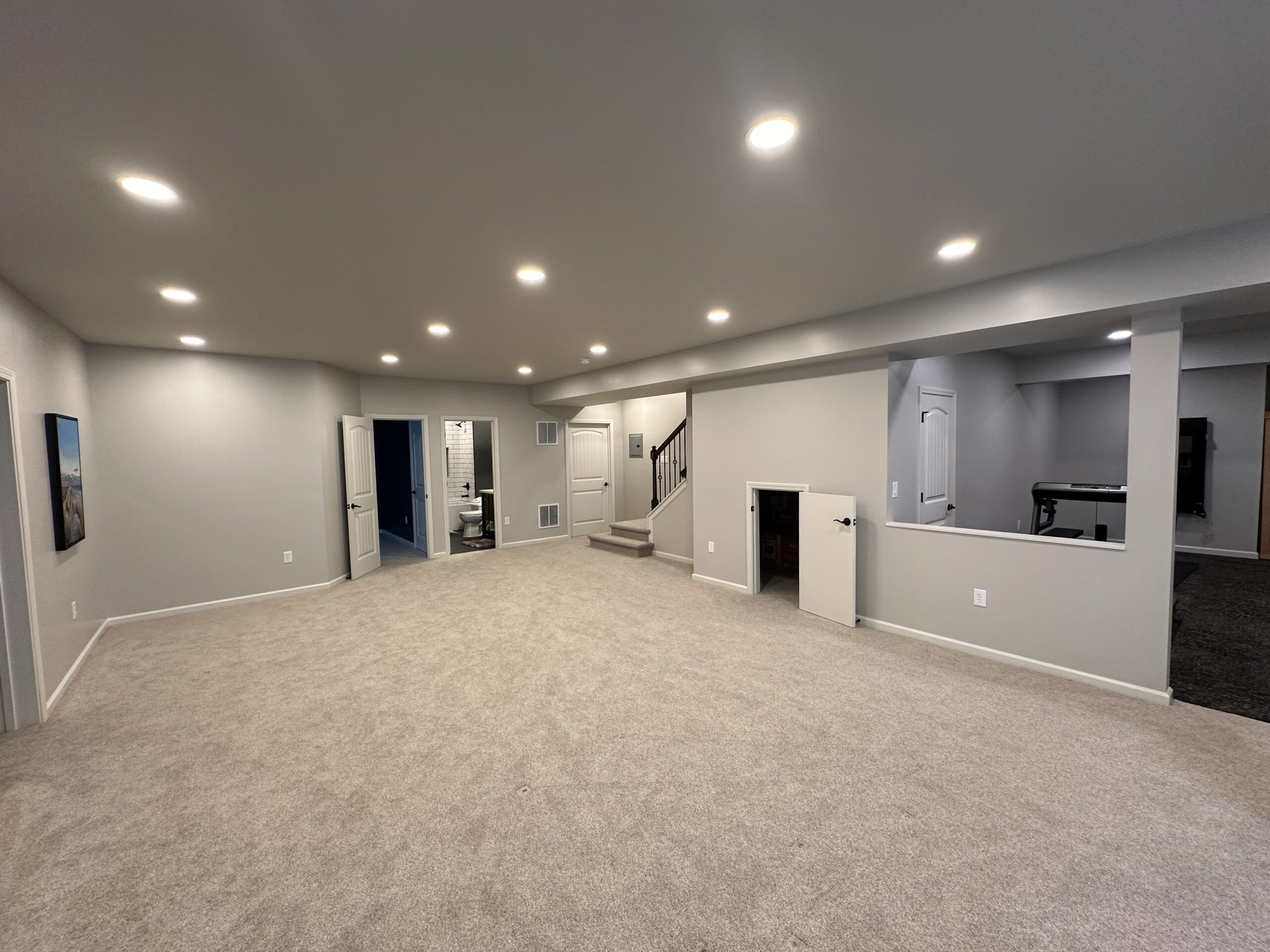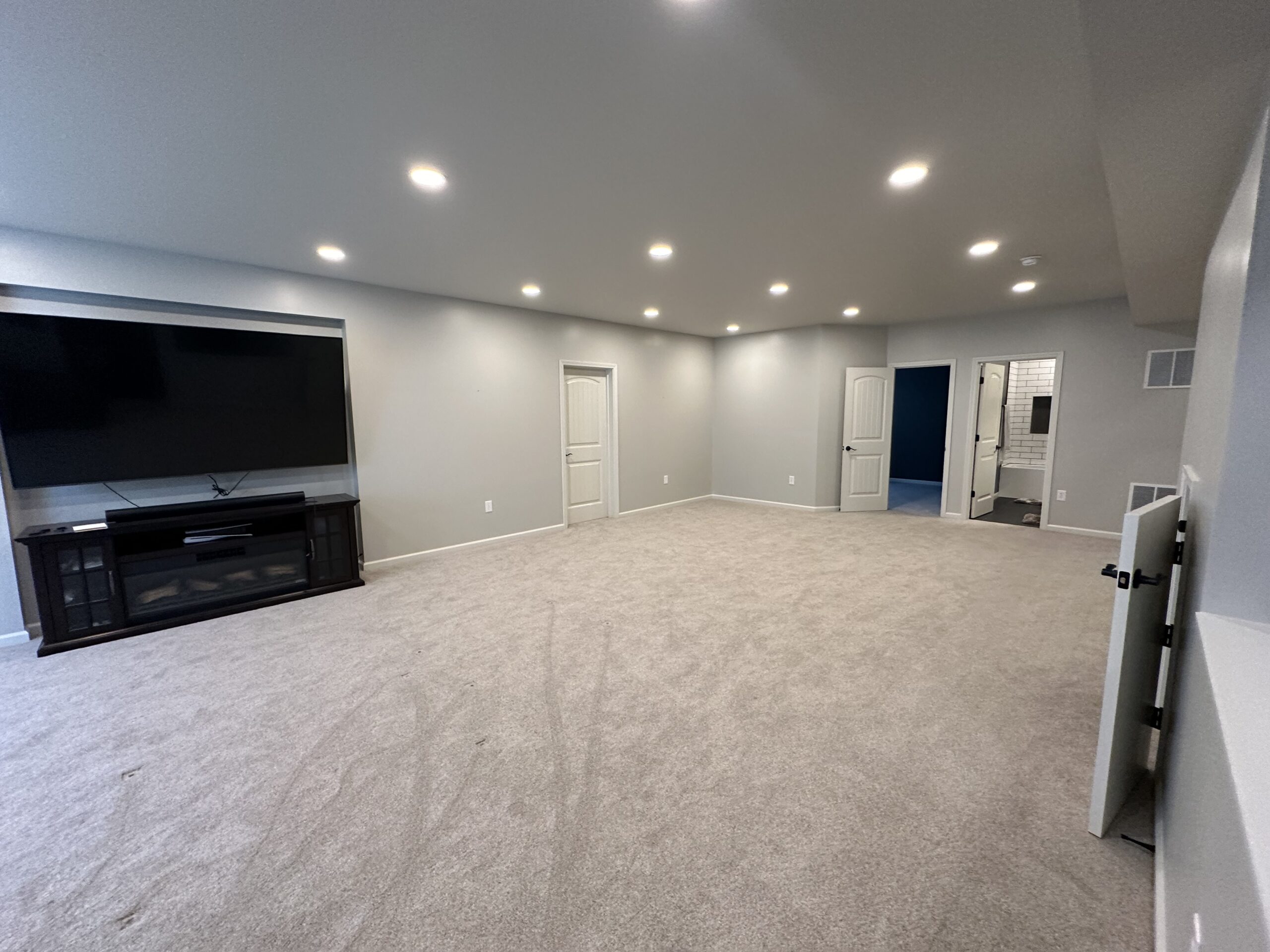
Spring is the season where your calendar fills up fast—March Madness watch parties, spring break days at home, family visits, and weekends that turn into spontaneous hangouts. If your main floor feels crowded every time you host, it’s usually not because you need a bigger house. You need better zones.
That’s why some of the best finished basement ideas aren’t about “adding a room”—they’re about creating a space that makes hosting easier and everyday life calmer. Below are a few proven layout approaches that work especially well this time of year, plus what to plan now if you want your basement ready in 2026.
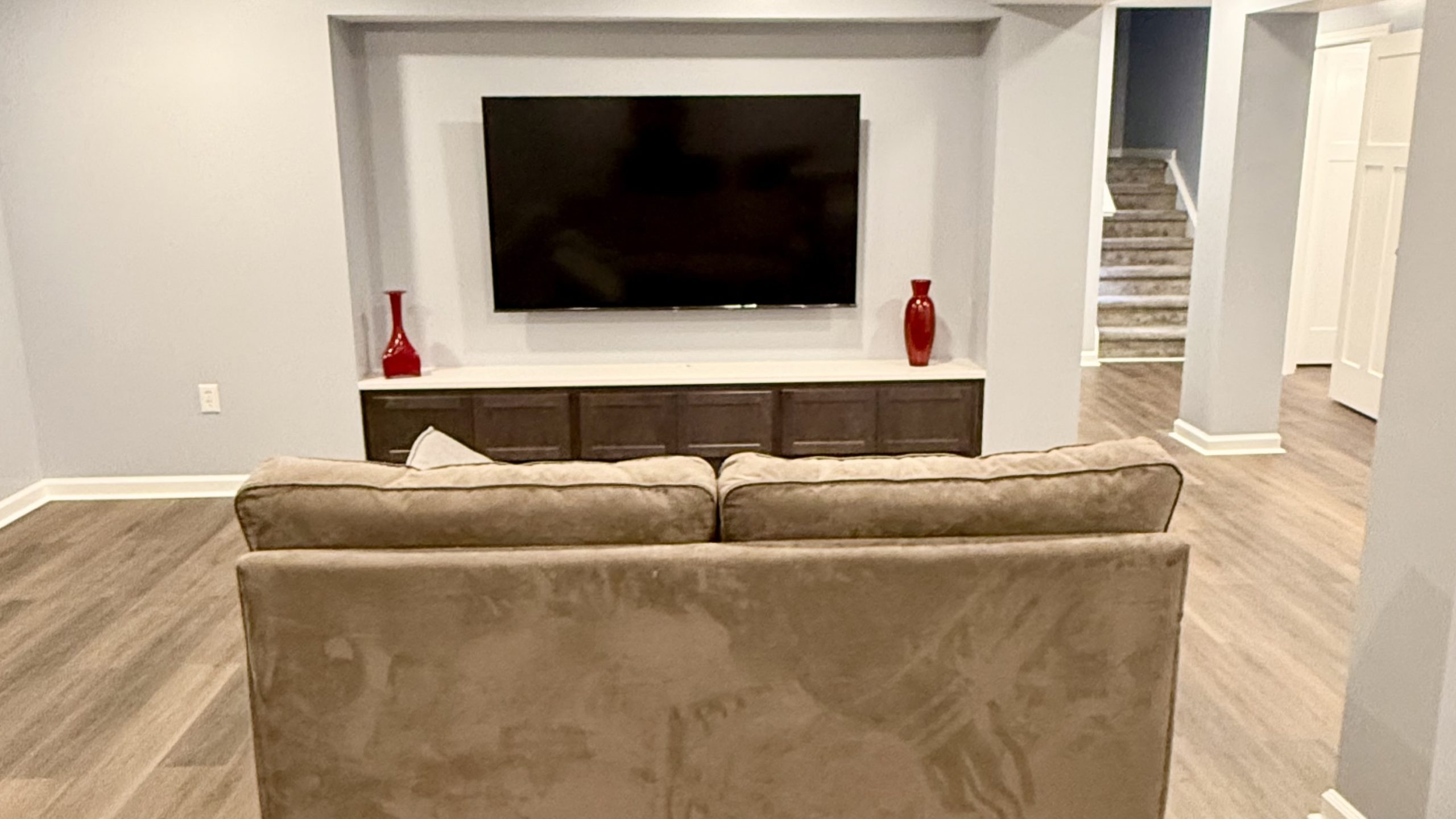
The Watch-Party Lounge: Where March Madness Belongs
A great basement lounge doesn’t need to be a full “home theater.” It just needs to feel like the best seat in the house.
Start with the layout: you want seating that faces the screen without awkward neck angles, and you want a clear walkway so people aren’t stepping over each other to grab snacks. Then focus on the details that make the space feel intentional—dimmable lighting, comfortable temperature, and sound that stays downstairs.
If you’ve ever hosted a game and felt like the kitchen turned into Grand Central Station, this lounge zone is your reset button. Put the party downstairs and let the main floor breathe.
Design touches that make a difference:
- Dimmable lighting (bright for cleanup, soft for the game)
- A clean media wall (hidden cords, room for future upgrades)
- Sound planning so cheers don’t echo into bedrooms
The Snack + Drink Station: The “No More Trips Upstairs” Upgrade
One of the simplest finished basement ideas with the biggest impact is a compact entertaining station. It doesn’t have to be a full kitchen to change everything.
Think of it like mission control for hosting: a place for drinks, snacks, paper towels, and trash—so guests don’t constantly rotate through your upstairs kitchen.
A typical setup might include an under-counter fridge, a small counter for serving, a microwave drawer, open shelves for cups, and a trash/recycle pull-out. If you add a sink, even better—but the “win” is the convenience, not the size.
This is also a great spot to create a seasonal moment: hot cocoa and cookie trays in winter, game-day spreads in March, and mocktails for spring gatherings.
The Flex Zone: Spring Break Hangouts + Sleepovers
Spring break is where the basement earns its keep. Kids are home. Friends come over. Energy levels are high. And if the only hangout space is your living room, you feel it.
A flex zone is the area that adapts—movie night today, sleepover tomorrow, board games and crafts the next day. The best approach is to plan durability first: floors that can handle traffic, storage that makes cleanup quick, and seating that can be rearranged.
If you want this space to actually stay tidy, build in the “reset.” A storage wall for games/controllers, bins for blankets, and a charging shelf for devices keeps the mess from migrating upstairs.
A simple layout that works well:
- TV + seating on one side
- Open floor space for games/mats in the middle
- Storage wall along the back
The Guest-Ready Corner: Privacy Without Taking Over Your House
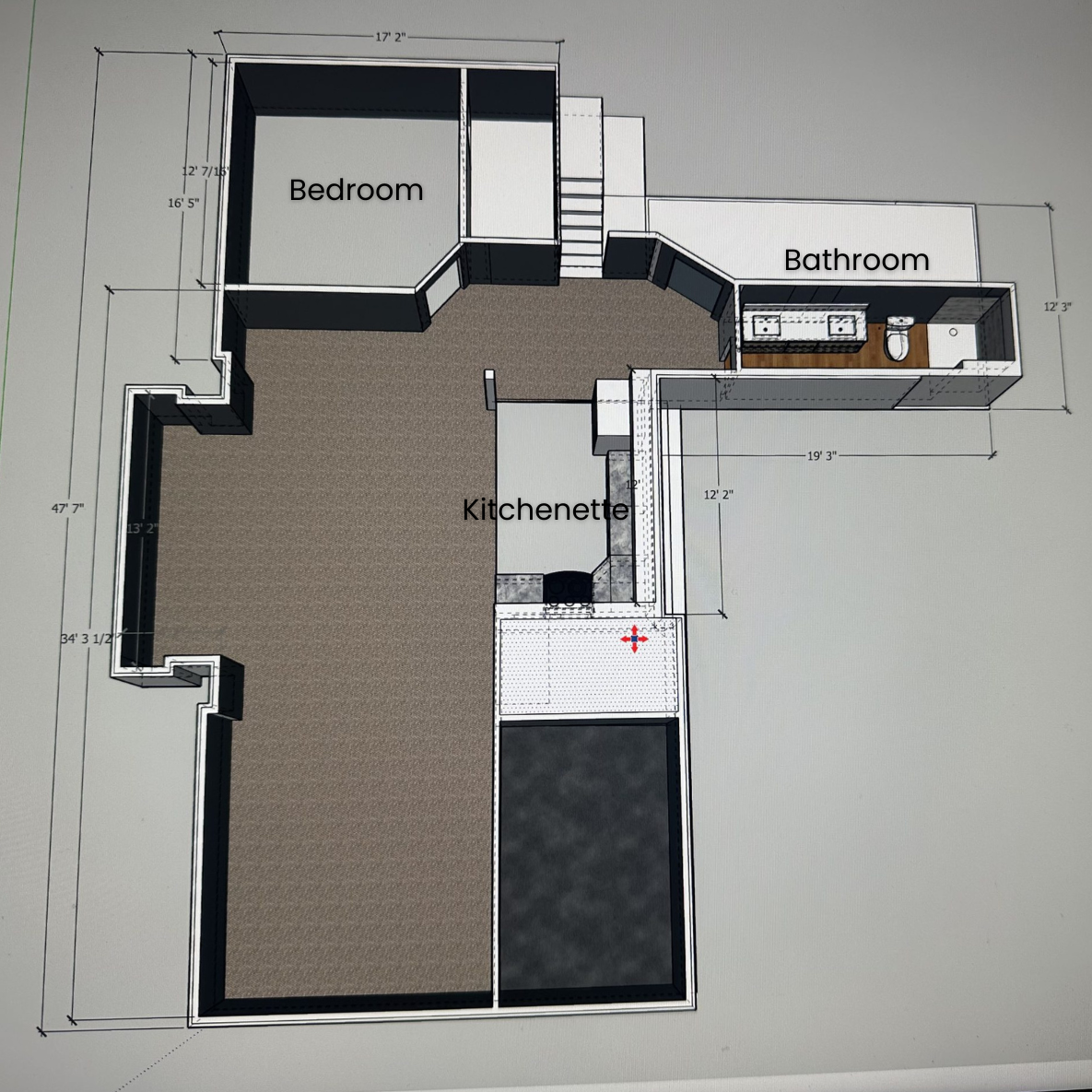
Spring is also travel season—family visits, tournament weekends, and last-minute guests. A basement guest area is one of the most practical finished basement ideas because it solves a real problem: hosting without feeling like you’re living on top of each other.
If you plan a true guest suite (bedroom + full bath), it can be a game-changer. But even a guest-ready corner—comfortable sleeping option, good lighting, and a nearby bathroom—can make your home feel more flexible.
If you’re considering a bedroom, make sure you’re planning for egress and safety from the beginning. That’s something you want to design correctly upfront, not try to “add later.”
Comfort First: The Invisible Stuff That Makes the Basement Feel Like Living Space
All of these ideas only work if the basement feels comfortable. If it’s chilly, drafty, or loud, the space becomes “nice to have” instead of “where we live.”
That’s why comfort planning matters: insulation, air sealing, and proper HVAC balance. Energy.gov has a helpful overview of where insulation makes the biggest difference in a home, including basements.
In a finished basement, the goal is simple: warm, quiet, and consistent—so you naturally use the space.
What the Process Looks Like (and Why to Start Now)
A finished basement comes together best when the planning is just as intentional as the build. From the first conversation to the final walkthrough, there are a few key phases we walk through to make sure the layout, selections, permits, and construction all stay aligned—especially if you’re trying to land a preferred start date on the 2026 calendar.
If you’d like to see the full step-by-step of how we take a basement from idea → design → build, we outline it here:
Our Process
Planning ahead is the simplest way to reduce surprises and keep things moving smoothly—especially during busy seasons when schedules and lead times tighten up.
Ready to Build Your 2026 Hosting Space?
If you’re considering a finished basement in 2026—watch-party lounge, flex hangout, guest area, or an entertaining station—we can help you map a layout and a realistic plan.
We serve homeowners in Carmel, Westfield, Zionsville, Brownsburg, and Avon.
👉 Request a design consult to plan scope, budget range, and scheduling.